Views: 0 Author: Site Editor Publish Time: 2026-08-21 Origin: Site
Visual saturation dominates modern retail, exhibition, and corporate environments. Capturing audience attention requires dynamic, high-resolution displays that break through the visual noise. Businesses need elegant aesthetics without committing to permanent architectural modifications. Traditional digital signage creates significant operational friction. Fixed LED walls demand extensive installation labor and structural changes to your facility. Standard LCD video walls suffer from frustrating bezel interruptions that break visual continuity and ruin large-format content. Standalone displays often prove too fragile and bulky for high-traffic areas, creating physical hazards rather than marketing assets. You need a solution that bridges the gap between premium visual performance and deployment flexibility. The Creative Series-X Poster LED Screen directly addresses these physical and operational challenges. This evaluation explores its technical specifications, ultra-slim design, and deployment agility. We will examine how this system transforms commercial spaces through superior engineering.
Visual Continuity: The bezel-free architecture and sub-2mm pixel pitch (e.g., P1.8mm) enable seamless multi-screen cascading without visual interruptions.
Durability and Protection: Integration of GOB (Glue on Board) technology significantly reduces the risk of dead pixels from physical impact in high-footfall environments.
360-Degree Deployment Agility: Plug-and-play functionality, an ultra-slim profile, and integrated omnidirectional mobility drastically reduce setup times for temporary events and modular retail spaces.
Interactive Marketing Potential: Beyond passive display, the system supports dynamic, customizable content strategies that revolutionize the modern shopping and exhibition experience.
Operational Trade-offs: While upfront capital expenditure is higher than traditional LCD posters, the extended lifespan, lower maintenance overhead, and superior ambient light performance yield a favorable long-term ROI.
Table of Contents
Commercial real estate dictates strict rules on structural modifications. Leased retail spaces often prohibit drilling into load-bearing walls. Trade show floors restrict permanent fixtures and charge heavily for union rigging labor. You need high-impact visuals without permanent installation requirements. Standalone digital signage bridges this gap perfectly. However, traditional kiosks occupy too much floor space. They block foot traffic and create dangerous choke points in crowded aisles. A successful deployment requires an ultra-slim footprint. It must integrate seamlessly into existing floor plans. You must maximize visual real estate while minimizing physical intrusion.
Modern displays must adapt to the space. When deploying hardware in a temporary exhibition, setup speed directly impacts labor costs. Heavy, cumbersome video walls require a dedicated crew, scaffolding, and hours of calibration. A mobile poster screen bypasses these logistical nightmares. One technician can roll the unit into position, lock the casters, and supply power within minutes. The physical depth of the base plate is engineered to provide maximum stability while taking up less than a few square feet of floor space, ensuring compliance with strict fire marshal regulations regarding aisle clearances.
Lighting conditions in commercial spaces destroy standard display visibility. Modern retail storefronts utilize massive glass facades. Sunlight floods the space and washes out standard LCD screens immediately. Typical commercial LCDs output between 300 and 500 nits. This brightness level fails completely against direct or indirect sunlight. High-brightness LED alternatives push past 1000 nits effortlessly. They maintain crisp visibility under intense ambient light. You cannot afford to have your marketing message look dull or faded to passersby. Superior brightness ensures your content captures attention from outside the store. It guarantees your visuals remain vibrant regardless of the time of day.
Furthermore, ambient light changes throughout the day. A display facing an eastern window takes a massive thermal and visual load in the morning. The hardware must feature automatic brightness adjustment sensors. These sensors read the ambient light levels and throttle the LED output accordingly. This prevents the screen from blinding customers at night while maintaining punch during peak daylight hours. Standard LCD polarizers also degrade when exposed to constant UV light from storefront windows, leading to purple or yellow discoloration over time. Direct-view LED technology does not rely on polarizers, making it inherently more resilient to prolonged sunlight exposure.
Static signage is obsolete. Modern campaigns require dynamic, responsive content. Decentralized content management dictates operational efficiency. Relying on specialized IT staff to update a single poster wastes time. You need systems that facilitate rapid, remote updates across multiple locations. Interactive marketing concepts demand real-time content triggers. Traditional standalone screens often rely on manual USB drive swaps. This creates a massive bottleneck for multi-location campaigns and weekend promotions. A modern digital canvas must support cloud-based, frictionless content delivery. Floor staff should be able to push new media without technical hurdles.
Networked displays allow a single marketing manager at corporate headquarters to push a synchronized video file to fifty different retail locations simultaneously. This guarantees brand consistency. It eliminates the human error associated with local staff forgetting to update the weekly promotional drive. Modern internal media players feature onboard eMMC storage, allowing them to cache the video files locally. If the retail store loses internet connectivity, the poster screen continues to loop the cached content flawlessly. This asynchronous control architecture ensures your screens never display a blank input error to the public.
Understanding the physical construction of your display dictates deployment planning. GOB stands for Glue on Board. It represents a massive leap over traditional SMD (Surface-Mounted Device) manufacturing. In standard SMD screens, individual LED diodes sit exposed on the circuit board. They are highly vulnerable to physical damage. GOB technology changes this entirely. Manufacturers pour a specialized, transparent epoxy resin over the entire module surface. This encapsulates the diodes completely. The resin shield protects against moisture, dust, and physical impacts. Floor-level poster displays face constant abuse. Suitcases bump into them. Cleaning equipment strikes their edges. GOB technology prevents dead pixels from these everyday collisions.
Pixel pitch determines image clarity. A P1.8mm pixel pitch means the distance between the center of each diode is exactly 1.8 millimeters. This tight density guarantees an optimal viewing distance of roughly 1.8 meters. Audiences standing right next to the screen see perfectly crisp text. They do not see individual pixels. This high resolution is mandatory for premium brand imagery. The encapsulation also improves the viewing angle. The resin acts as a microscopic lens, dispersing the light evenly. This means a customer walking past the screen at a sharp 160-degree angle still sees accurate colors without color shifting or brightness drop-off.
Thick bezels destroy visual continuity. Traditional LCD video walls force viewers to look through a grid of black lines. This breaks the immersion of your content. Structural engineering has eliminated edge bezels on premium LED posters. The chassis remains ultra-slim, often measuring just a few centimeters deep. This elegant design suits high-end corporate lobbies and luxury retail environments perfectly. The cabinets are typically constructed from CNC-machined aluminum, which provides immense structural rigidity while keeping the overall weight manageable for a single technician to maneuver.
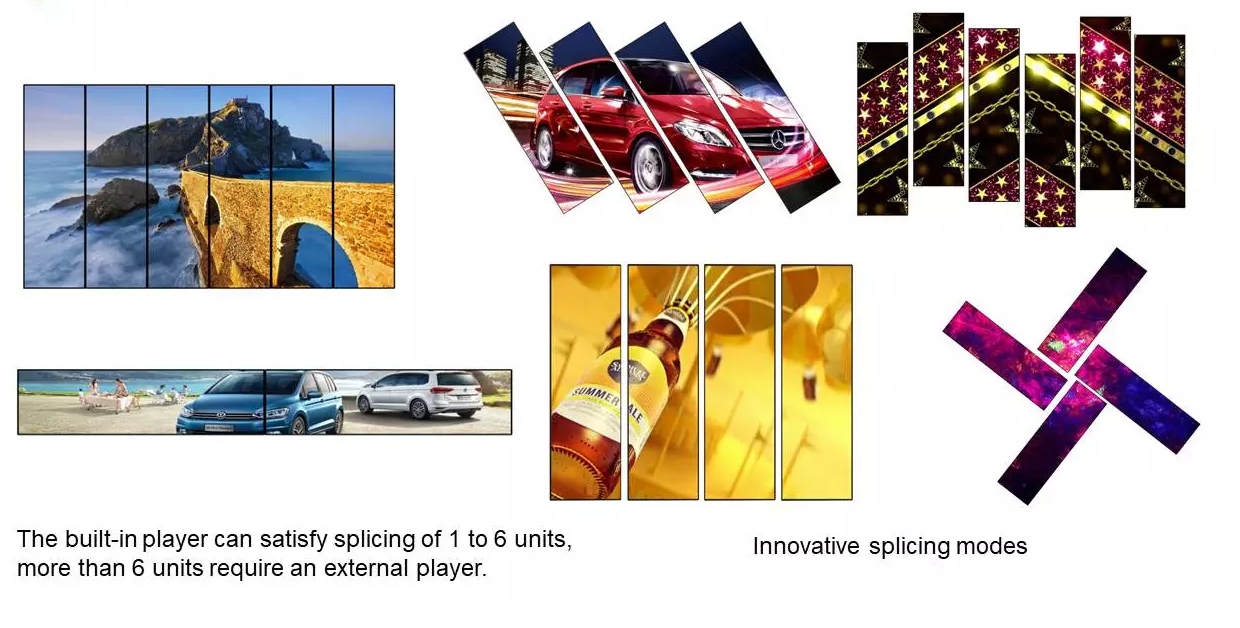
Connecting multiple units requires extreme mechanical precision. You cannot rely on visual alignment alone. The system utilizes advanced mechanical alignment pins. These pins guide the cabinets into perfect position. Magnetic locking systems then snap the panels tightly together. This creates a flawless, zero-gap visual canvas. You can cascade three, five, or ten screens together. The result is one massive, uninterrupted digital wall. Bezel-free cascading delivers uninterrupted brand messaging across a massive surface area. When technicians lock the cabinets together, the internal data and power cables often daisy-chain through concealed ports. This eliminates the messy cable runs associated with multi-screen LCD setups.
Raw brightness is only one part of the performance equation. High nits ratings cut through ambient light, but contrast dictates image depth. Contrast ratios determine how black the dark areas of your screen appear. Deep blacks make colors pop and grab attention. Grayscale performance is equally critical. When you lower the screen brightness in a darker room, standard displays lose color accuracy. They display banding and muddy shadows. Premium LED controllers maintain high grayscale depth even at 20% brightness. Your brand colors remain perfectly accurate regardless of the room's lighting.
Refresh rates matter immensely in the smartphone era. A low refresh rate causes terrible moiré effects and scan lines on camera. Attendees will photograph and film your displays. A 3840Hz refresh rate ensures the screen looks perfect on video. It eliminates flickering entirely, ensuring your brand looks professional on social media. The driving ICs (Integrated Circuits) behind the LED modules handle this rapid switching. High-quality PWM (Pulse Width Modulation) ICs maintain the 3840Hz rate without generating excessive heat, ensuring the diodes operate within their safe thermal limits while delivering 16-bit color depth.
Technical Feature | Traditional LCD Poster | GOB LED Poster (P1.8mm) |
|---|---|---|
Bezel Width | Visible (Typically 3mm - 10mm) | Zero-Gap (Bezel-Free) |
Brightness Output | 300 - 500 Nits | 1000+ Nits |
Impact Resistance | Low (Exposed Glass) | High (Epoxy Resin Encapsulation) |
Multi-Screen Cascading | Grid lines visible between screens | Seamless unified canvas |
Refresh Rate | 60Hz - 120Hz | 3840Hz (Camera-friendly) |
Viewing Angle | 120 Degrees (Color shift at edges) | 160+ Degrees (Consistent color) |
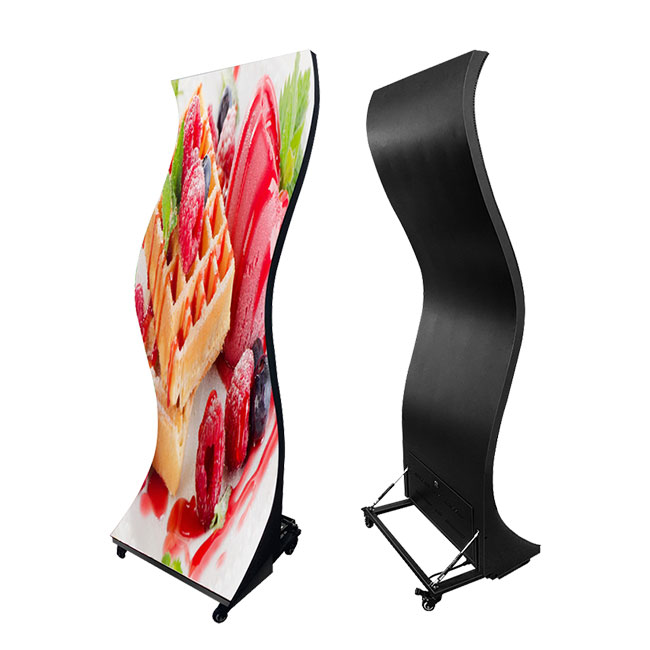
Portability transforms how you utilize digital signage. A fixed screen serves one purpose. A mobile screen adapts to your daily operational needs. The physical footprint of a modern LED poster is highly optimized. The weight distribution sits low, preventing the unit from feeling top-heavy. Integrated mobility features define this agility. Lockable multidirectional wheels sit concealed within the base. They allow the display to rotate 360 degrees effortlessly. You can push the screen across carpet, tile, or concrete. This enables rapid floor plan reconfigurations for different events.
Structural stability is paramount when moving heavy digital equipment. Fold-out kickstands provide immediate anchoring. Weighted base plates lower the center of gravity. These features prevent tipping during movement or when stationed in high-traffic zones. The casters are typically manufactured from aviation-grade polyurethane, ensuring they do not scuff polished retail floors or sink into thick exhibition carpets. When deploying the Creative Series-X Poster LED Screen in a temporary pop-up shop, the mobility allows staff to roll the unit inside the store at closing time. This secures the asset overnight without requiring complex dismantling procedures.
Scaling your digital footprint requires robust hardware integration. Connecting three or more LED poster screens creates a high-impact visual destination. This process is called daisy-chaining. Hardware requirements typically involve HDMI loop-through cables. You connect the output of the first screen to the input of the second. Internal sending cards manage the signal distribution across the physical hardware. A standard HDMI 2.0 cable can carry a 4K resolution signal at 60Hz. Technicians must calculate the total pixel count of the cascaded screens to ensure it does not exceed this bandwidth limit.
The software configuration is surprisingly straightforward. You input the total pixel dimensions of your cascaded screens into the control software. The system automatically splits a single high-resolution video file across the joined displays. Latency is the enemy of cascaded screens. If one screen processes the video a millisecond slower, you get visual tearing. Advanced synchronization protocols lock the refresh cycles of all connected receiving cards. This guarantees perfectly synchronized playback across the entire digital canvas. The primary controller acts as the master clock, sending a sync pulse down the data line. Every receiving card waits for this pulse before drawing the next frame.
Content delivery must match your operational capabilities. Native media players offer simple USB plug-and-play functionality for quick deployments. However, enterprise operations require network connectivity. Wi-Fi and LAN connections enable seamless, remote updates. Compatibility with third-party, enterprise-grade CMS platforms is essential. This allows your marketing team to manage a fleet of screens from a central dashboard. You can schedule content, monitor screen health, and push emergency updates instantly. Advanced CMS platforms also provide proof-of-play logs, which verify exactly how many times a specific video ran.
The display enables powerful interactive marketing concepts. You can integrate QR codes into the video loop. Customers scan the screen to receive immediate discount codes or product details. Dynamic triggered content elevates the shopping experience further. You can link the screen to inventory systems via API integrations. If an item sells out, the poster automatically switches to a different product promotion. The user interface remains intuitive. Non-technical floor staff can upload daily promotional content without calling IT support. To execute a remote update, staff simply follow these steps:
Log into the secure cloud-based CMS dashboard via a web browser.
Select the specific target screens or geographic display groups.
Upload the new MP4 video file or HTML5 interactive asset.
Set the scheduling parameters for the campaign start and end dates.
Publish the payload, allowing the screens to download the content in the background without interrupting current playback.
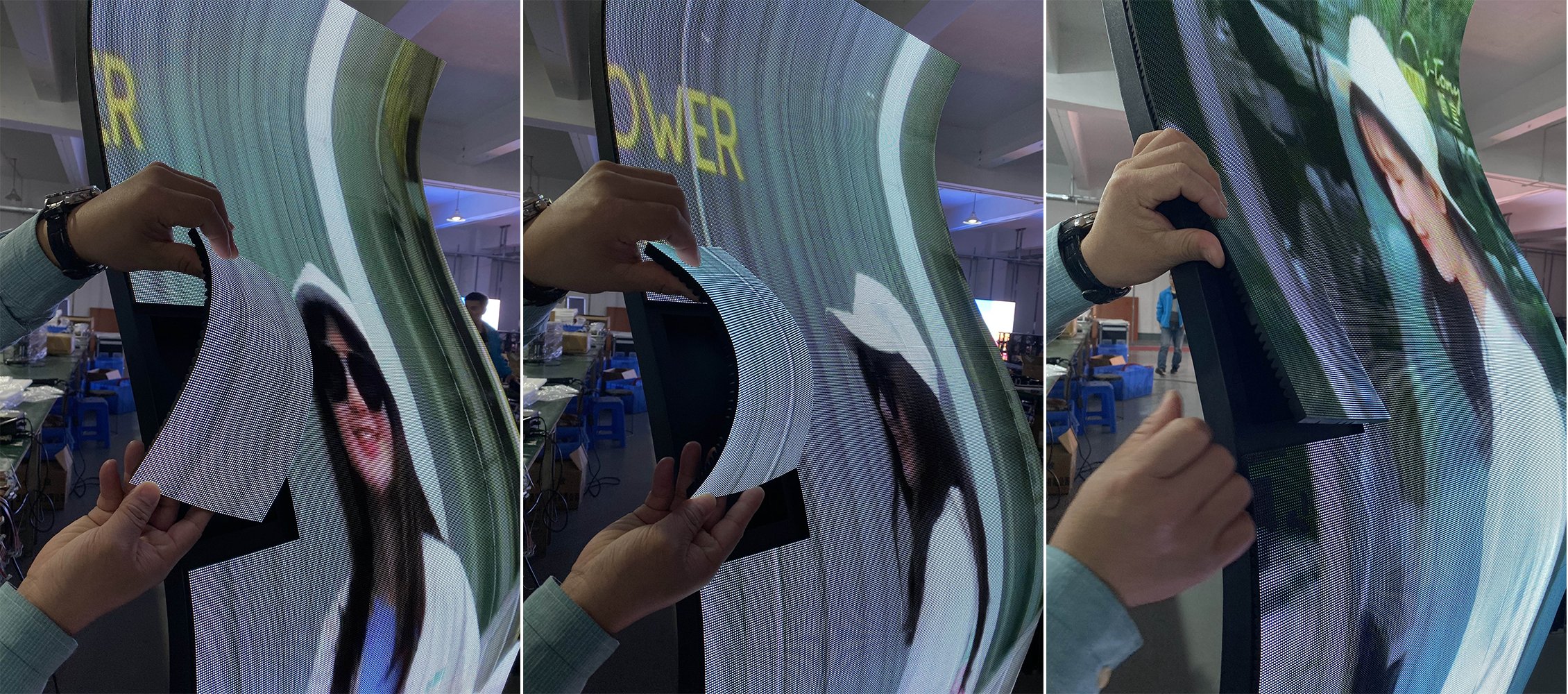
Operational uptime relies on efficient maintenance protocols. When a single LED module fails, you cannot afford to dismantle the entire display. Modern LED posters utilize front-serviceable designs. Magnetic module extraction tools allow technicians to pull a defective module directly from the front of the screen. You swap the module on-site in minutes. The display returns to full operation immediately. This eliminates the need to ship the entire unit back to a service center. The internal ribbon cables connecting the module to the hub board are designed for quick-release, requiring no specialized soldering tools.
The receiving card stores the calibration data for the screen. When you insert a new module, the receiving card automatically pushes the correct color and brightness calibration to the new hardware. This ensures the replacement module matches the surrounding screen perfectly. You do not need to manually recalibrate the display with specialized optical cameras. This hot-swappable architecture means a retail store manager can replace a damaged module before the store opens, ensuring the brand image remains flawless for the daily foot traffic.
Power consumption metrics directly impact your electrical infrastructure planning. You must evaluate average and maximum power draw when deploying multiple units on a single circuit. A standard 15-amp circuit can only support a specific number of cascaded screens before tripping the breaker. Technicians must calculate the maximum draw during full-white, 100% brightness playback to ensure electrical safety. The power supplies inside the chassis convert standard AC wall power to the low-voltage DC required by the LED modules. High-efficiency PFC (Power Factor Correction) power supplies generate less waste heat, reducing the thermal load on the entire system.
Thermal management systems keep the internal components cool during 24/7 operation. Fanless designs rely on passive aluminum heat sinks. They operate completely silently, which is necessary for quiet corporate lobbies and intimate retail spaces. Active cooling systems use fans but can introduce unwanted ambient noise. Selecting the right thermal design ensures longevity without disrupting the customer environment. The CNC-machined aluminum chassis acts as a giant heat sink, pulling thermal energy away from the driving ICs and dissipating it into the surrounding air naturally.
Deploying standalone hardware in public spaces carries inherent physical risks. Crowded retail aisles present a constant tipping hazard. Shoppers carry heavy bags and push strollers. Accidental impacts happen frequently at busy trade shows and exhibitions. Mitigating these physical dangers requires proactive planning. Utilizing floor-mounting brackets secures the display permanently if mobility is no longer needed. For mobile setups, weighted base accessories are mandatory. They lower the center of gravity and drastically increase the force required to tip the unit.
The inherent impact resistance of GOB technology serves as the final line of defense. If the screen does take a direct strike from a shopping cart, the epoxy resin protects the fragile LED diodes from shattering. Facility managers should also consider ADA (Americans with Disabilities Act) compliance when placing screens. The ultra-slim profile ensures the display does not protrude dangerously into pedestrian walkways, maintaining clear paths for wheelchair access. For semi-outdoor deployments under awnings, technicians must also calculate wind-load ratings and utilize heavy-duty sandbags on the base plates.
Digital signage is an endpoint on your corporate network. Unauthorized access to the display's network interface is a serious threat. Malicious actors can hijack the screen to display inappropriate content. Wireless displays present significant vulnerabilities if left unsecured. Implementing isolated VLANs for your digital signage network is the first mitigation step. This separates the screens from your point-of-sale and corporate data networks. Disabling default SSIDs hides the display's internal Wi-Fi router from casual scanning by smartphones.
Utilizing encrypted CMS platforms secures the data transmission pipeline. Always change default administrator passwords on the internal media players before deploying them to the public floor. Strict network hygiene prevents embarrassing public display breaches. IT departments should implement MAC address filtering on the switch ports connected to the screens. This ensures only authorized hardware can communicate across the signage network. Furthermore, physical USB ports on the media player should be disabled via firmware to prevent bad actors from walking up and injecting a malicious payload directly into the screen.
As a pioneering innovator in high-performance visual display engineering, Shenzhen Lightingart LED Display Co., Ltd. combines world-class manufacturing, cutting-edge R&D, and rigorous quality assurance to deliver industry-leading LED solutions tailored for global brands.
Audit your current floor plan to identify high-traffic zones suitable for mobile digital signage deployment.
Request a technical specification sheet to verify the exact power draw and network requirements for your facility.
Schedule a live virtual demonstration to observe the zero-gap cascading feature and synchronization protocols in real time.
Consult with your IT department to establish an isolated VLAN and secure firewall rules for remote content management.
A: The optimal viewing distance is approximately 1.8 meters. At this distance, the human eye cannot distinguish individual pixels, resulting in a perfectly smooth, high-definition image ideal for close-proximity retail and exhibition environments.
A: You connect them physically using built-in mechanical alignment pins and magnetic locks for a zero-gap fit. Data is daisy-chained via HDMI loop-through cables. Control software then maps the total pixel resolution, splitting one video file seamlessly across all units.
A: Standard SMD leaves fragile LED diodes exposed on the circuit board. GOB (Glue on Board) encapsulates the diodes in a transparent epoxy resin. This provides critical protection against moisture, dust, and physical impacts, which is essential for floor-level displays.
A: Yes. Unlike standard LCD screens that output 300 to 500 nits and wash out in sunlight, these LED posters typically output 1000 nits or more. This high brightness cuts through intense ambient light and window glare easily.
A: It is very straightforward. Modern LED posters feature front-serviceable modules. Technicians use a magnetic extraction tool to pull the specific defective module directly from the front, swapping it out in minutes without dismantling the entire screen.
A: You can use the native software provided by the internal controller for basic playback. For advanced interactive content, scheduling, and remote multi-location management, you integrate the display with third-party, enterprise-grade Content Management System platforms.
A: Yes. The multidirectional wheels and base plates are modular. You can remove them to utilize wall-mounting brackets or floor-mounting hardware, allowing the screen to sit flush against a wall for permanent architectural integration.